Obby Block World: Craft City
BMH GameAdventure
4.520.00 Reviews
- Version
- 0.33
- Installs
- 1.00M
- Age Rating
- Teen
Screenshots
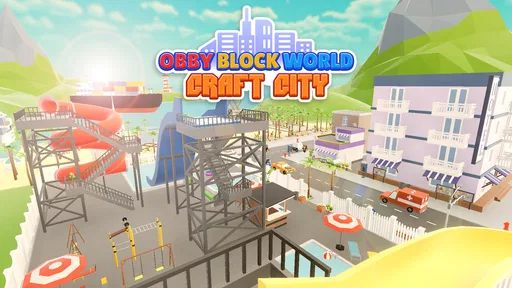
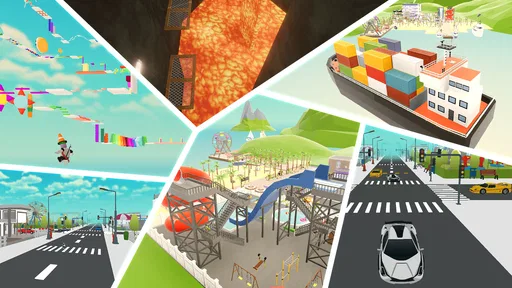
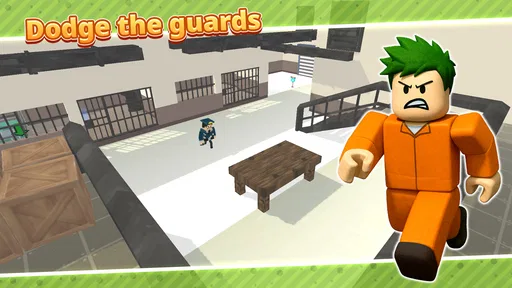
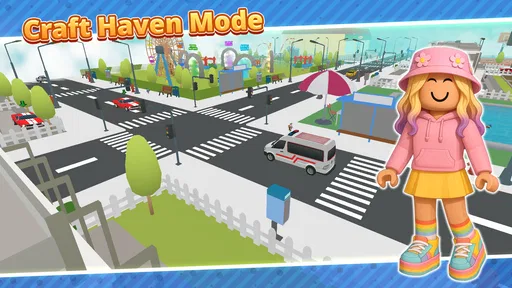
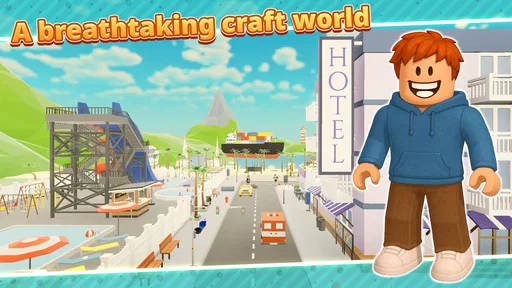
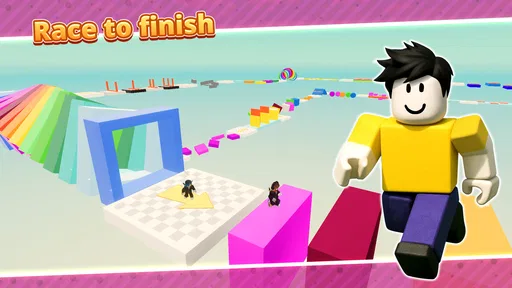
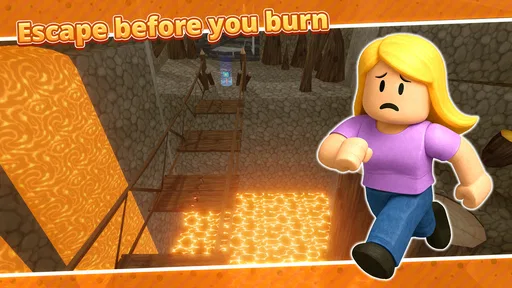
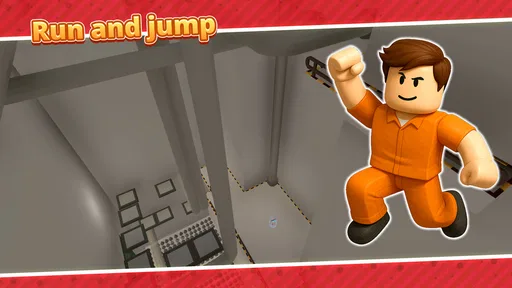
Our Review of Obby Block World: Craft City
 Analysis by Appyee
Obby Block World: Craft City is the kind of adventure game I open when I want a relaxed building session with a little movement-based challenge mixed in. Its central idea is easy to understand: shape a blocky city, then use that world as a place to explore and play. I found the appeal less about chasing a complicated objective and more about having room to experiment with a personal environment.
That combination gives it a different feel from a straightforward obstacle course game. The city-building side encourages patience and imagination, while the obby-style identity suggests that movement and navigation are part of the experience rather than decoration. If you enjoy making a space your own and then spending time inside it, this adventure game has a clear reason to exist.
My overall view is that it works best as a free, casual creative game, especially for players who like block-based worlds but do not want a demanding survival routine. It is not the right choice for everyone, though. Players looking for a deep construction simulator, a tightly designed campaign, or a highly competitive obstacle game may find the experience too open-ended.
How the game feels in everyday play
On a typical evening, I can imagine using it in short bursts: build a small area, adjust the layout, try a route through the city, and stop when the session feels complete. That makes the game approachable for someone who does not want to commit to a long story or maintain a complicated progression system. The city itself becomes the reason to return, because the next session can focus on a different idea.
The block-based presentation also helps keep the concept readable. Buildings, paths, open spaces, and obstacle areas are easier to understand when the visual language is simple. I appreciate that kind of clarity on a phone, where a crowded interface or overly detailed environment can make basic navigation tiring.
The important distinction is that “build your own world” does not automatically mean unlimited depth. In my experience with games built around this promise, the enjoyment depends on how much freedom the tools provide and how satisfying the results feel after several sessions. This title is most attractive to players who enjoy setting their own small goals rather than waiting for the game to constantly provide new instructions.
The cost is simple to understand
Obby Block World: Craft City is free to access. That matters because the game’s relaxed structure makes it suitable for trying without first deciding whether a purchase is justified. You can approach it as a low-commitment experiment: install it, spend time with the city-building and obstacle-focused play, and decide from your own experience whether the loop holds your attention.
I would still separate free access from guaranteed unlimited value. A free game can be enjoyable while having limits in variety, depth, or long-term motivation. Since the listed price is free, my recommendation is based on whether the core activity suits you, not on a paid-versus-paid comparison. I would not describe it as a bargain in the same way as a premium game; its value comes from offering an accessible creative pastime without an entry charge.
The game is from BMH Game and is listed for players aged Teen. That age guidance is worth considering before handing it to a younger player, even if the block-style appearance looks friendly. I would use the rating as the practical boundary and avoid assuming that a colorful visual style automatically makes the game suitable for every age group.
What makes the city-building idea worthwhile
The strongest part of the concept is the relationship between making a place and moving through it. Building is not only a decorative activity if the finished layout affects where you walk, what you see, or how you approach an obstacle. Even a modest change in the arrangement can make the city feel more personal than a fixed level selected from a menu.
One useful way to play is to build with a purpose instead of placing objects randomly. I would start with a central landmark, leave clear routes around it, and reserve one area for more challenging movement. This creates a simple internal structure: a place to orient yourself, a route to revisit, and a section where experimentation feels separate from the rest of the city.
Another practical approach is to build in small themes. Rather than trying to create an entire perfect city in one sitting, I would make a compact neighborhood, a park-like area, or a route designed around a particular visual idea. Smaller projects are easier to finish, and finishing something gives the game a stronger sense of progress even when the main motivation is self-directed creativity.
That is one of the less obvious strengths here. The game can act as a lightweight planning exercise. You are not merely placing blocks; you are deciding how a space should flow. Players who enjoy arranging rooms, sketching layouts, or making miniature scenes may get more from this than someone who only wants fast obstacle action.
Where the obstacle-course side fits
The “obby” identity gives the world a second purpose. A city is more interesting when it is somewhere to navigate, not just something to look at. I like the idea of treating the built environment as a route: a street can become a starting point, an open section can provide breathing room, and a deliberately arranged series of obstacles can create a personal challenge.
This also creates a trade-off. A player who prefers carefully authored obstacle levels may not enjoy designing or exploring a space that depends heavily on personal construction. Fixed courses usually provide clearer pacing and a more controlled difficulty curve. A creative city game, by contrast, asks the player to contribute some of the structure.
For that reason, I would not choose this as my first recommendation for someone who wants immediate, polished obstacle stages with no setup. I would choose it for someone who likes the idea of making the setting part of the challenge. The difference is important: the game’s appeal is not simply “jump through obstacles,” but “create a world where exploration and obstacles can coexist.”
Small habits that improve the experience
I found that a little organization makes a creative game feel much better. I would avoid filling every open space immediately. Empty areas give the city visual breathing room and make later additions easier to place. They also help you recognize which parts of the world are finished and which still need attention.
I would also test routes before treating a section as complete. A path that looks attractive from above may be awkward to follow at ground level. Walking through the area after building it lets you notice confusing turns, cramped spaces, or an obstacle that interrupts the flow. This simple build-then-test cycle is more useful than trying to design everything perfectly in advance.
A third tip is to keep a clear distinction between showcase areas and experimental areas. Put your more polished ideas where you will see them often, and use a separate section for strange layouts or difficult routes. That way, experimentation does not make the whole city feel unfinished. It also gives you permission to make mistakes, which is important in a game based on personal creation.
These habits do not require advanced knowledge, but they change how the game feels. Instead of placing items until the screen looks busy, you begin making deliberate spaces. That is where I think the title has more value than its short store description suggests.
Performance expectations and practical fit
The current version is 0.33, and the game supports devices running Android 7.1 or later. Those details make it relevant to people using older compatible Android phones, although compatibility alone does not tell me how every device will perform. I would still expect the experience to vary depending on the phone, the size of the created world, and how much is happening on screen.
For everyday use, I would keep the first building project modest. Starting with a contained city section lets you judge navigation and responsiveness before investing time in a much larger design. It is also a sensible way to avoid creating a world that becomes difficult to manage simply because it grew without a plan.
I would be cautious about expecting the same technical polish as a large, established sandbox game. A smaller title can be more approachable, but it may also feel less comprehensive in its tools, presentation, or long-term structure. That is not automatically a problem; it simply means the best comparison is with lightweight creative and obstacle games rather than with the biggest block-building experiences.
How it compares with familiar alternatives
Compared with a traditional obstacle game, this title gives more importance to the setting. A standard obby usually focuses on timing, route knowledge, and repeated attempts through a prepared sequence. Here, the creative city is part of the attraction, so the experience can feel less like a test and more like a personal playground.
Compared with a large sandbox builder, it appears easier to approach but narrower in ambition. Major sandbox games often ask players to manage resources, survive threats, learn complex crafting chains, or spend a long time developing a world. Obby Block World: Craft City is a better fit if you want the simple pleasure of shaping a block environment without turning every session into a management project.
Compared with a premium building game, the free price makes trying it easier, but I would judge it by the quality of its central loop rather than by the number of systems it may or may not include. Someone willing to pay for a deeper, more expansive construction experience may find better long-term value elsewhere. Someone who wants a no-cost way to explore the basic idea may find this a more comfortable starting point.
The comparison also explains who should skip it. If your favorite part of block games is survival pressure, complex automation, or large-scale resource planning, this is unlikely to replace those experiences. If your favorite part is visual experimentation and moving through a world you helped shape, the fit is much stronger.
Who is most likely to enjoy it
I would recommend it to casual players who like creative tasks with a clear visual result. It should also appeal to fans of block-style environments who enjoy obstacle movement but do not need a strict competitive ladder. The game is especially suitable for short sessions, because you can work on one small section of a city rather than waiting for a long campaign chapter to finish.
It may also work well for friends or family members who enjoy showing each other creations, provided the game’s age guidance is respected. A compact themed neighborhood is easier to explain and share verbally than a huge unfinished world. Building with a specific idea in mind gives the session a natural endpoint and makes the result more satisfying.
I would skip it if I wanted a detailed city simulator with realistic planning, traffic, economics, or civic management. I would also skip it if I wanted a pure precision platformer where every level has a carefully tuned solution. This game sits between those expectations: creative enough to invite personal design, active enough to encourage exploration, but not necessarily a replacement for either specialized genre.
What the rating and audience suggest
The game holds a 4.5 average from around 4,800 ratings, and it has passed the one-million-install mark. Those figures suggest that the basic idea has found a substantial audience, but they should not replace personal testing. A popular creative game can still feel repetitive to someone who needs constant objectives, while a less demanding player may enjoy it for exactly that relaxed quality.
The listing also shows around twenty written reviews, which is a much smaller sample of detailed commentary than the broader rating count. I would therefore treat the numerical reception as a useful sign of interest rather than a complete explanation of the game’s strengths and weaknesses. My own decision would still depend on whether building and navigating a personal city sounds enjoyable.
The Teen content rating is another reason to think about audience before installing. The block presentation may make the game appear universally accessible, but the official age guidance should take priority over assumptions based on its art style. For a Teen player or adult, that rating is unlikely to be a concern; for younger children, I would choose an experience with a more suitable classification.
My buy-or-skip verdict
Because the game is free, I see little reason for a curious player to reject it solely on cost. The more important question is whether you want a self-directed building experience with an obstacle-course flavor. If that sounds appealing, I would try it with a small project first: create one recognizable district, test how enjoyable it is to move through, and then decide whether the creative loop deserves more of your time.
I would recommend skipping it when your priority is depth in a specific direction. Choose a larger sandbox if you want extensive systems and long-term world management. Choose a dedicated obby if you want tightly controlled challenges. Choose a city simulator if planning and administration are the main attraction. This game is not trying to be all of those at once, and expecting it to deliver each one fully would lead to disappointment.
For me, the best reason to keep Obby Block World: Craft City installed is the freedom to turn a simple block space into something that reflects my own choices. The most useful mindset is to treat each session as a small design project rather than waiting for the game to provide endless direction. With that expectation, BMH Game’s adventure title offers an approachable free entry point, a creative setting, and enough movement-focused identity to make the city feel playable rather than merely decorative.
My final recommendation is positive but targeted: try it if you want a casual block-building adventure where your layout matters, and leave it aside if you need a deep simulator or a pure obstacle challenge. Its value comes from the balance between making a place and exploring it, not from pretending to replace every other game in the category.
Verdict
Strengths of Obby Block World: Craft City
- Bright block-based visuals are appealing to younger players.
- Platforming challenges are easy to understand from the first level.
- Creative city environments make exploration feel rewarding.
- Short stages suit quick gaming sessions on mobile.
- Simple controls work well on touchscreens.
Limitations of Obby Block World: Craft City
- Some obstacles may feel repetitive after extended play.
- Difficulty can vary noticeably between different stages.
- The blocky graphics may feel basic to players seeking realism.
- Progression may offer limited depth for experienced gamers.
- Ads or optional purchases may interrupt the playing experience.
Similar Picks in This Category
View All
Roblox
Roblox Corporation4.2

Pokémon GO
Niantic, Inc.3.5

Ninja warrior: legend of adven
TOH Games4.6

Ninja Arashi
Black Panther4.6

Eyes - The Horror Game
Fearless Games sp. j.4.5

Critical Action:Gun Strike Ops
FPS Shooter & Action Game4.3
Frequently Asked Questions
What is Obby Block World: Craft City?
Obby Block World: Craft City is a block-style adventure game that combines obstacle-course challenges with creative exploration. Players can move through colorful 3D environments, overcome jumps and traps, and explore a city inspired by voxel-based building games. Its simple controls and bright presentation make it accessible to younger players, while the platforming sections provide enough challenge to keep casual gamers interested.
How do you play Obby Block World: Craft City?
Gameplay mainly involves guiding your character through obstacle courses, avoiding hazards, timing jumps, and reaching the finish area safely. The levels generally reward patience and careful movement rather than complicated combat mechanics. As you progress, the layouts may become more demanding, so learning the timing of jumps and checking the route ahead is important. The game is designed to be easy to start without requiring previous experience.
Is Obby Block World: Craft City free to download and play?
Obby Block World: Craft City can generally be downloaded without an upfront purchase, although availability and pricing may depend on the Android or iOS store in your region. Free games of this type may include advertising, optional purchases, or other monetization features. Before installing, it is worth checking the store listing for current information about in-app purchases, advertisements, permissions, and any age-related guidance.
Can Obby Block World: Craft City be played offline?
Some parts of Obby Block World: Craft City may work without a continuous internet connection, particularly if the game only requires access to locally stored obstacle-course levels. However, advertisements, updates, analytics, or online features may require connectivity. Offline behavior can also change after an update, so players should test the game after installation rather than assuming every mode will remain available without Wi-Fi or mobile data.
Is Obby Block World: Craft City suitable for children?
The game’s colorful block-based graphics, straightforward objectives, and obstacle-course gameplay can make it suitable for children who enjoy casual platforming. Nevertheless, parents should review the official age rating and store description before downloading. It is also sensible to check whether advertising, external links, chat functions, or in-app purchases are present, and to enable device-level parental controls if younger children will be playing.
Play our best games!


